Can A Digital Banking Startup Become Profitable In Just One Full Year As A Bank?
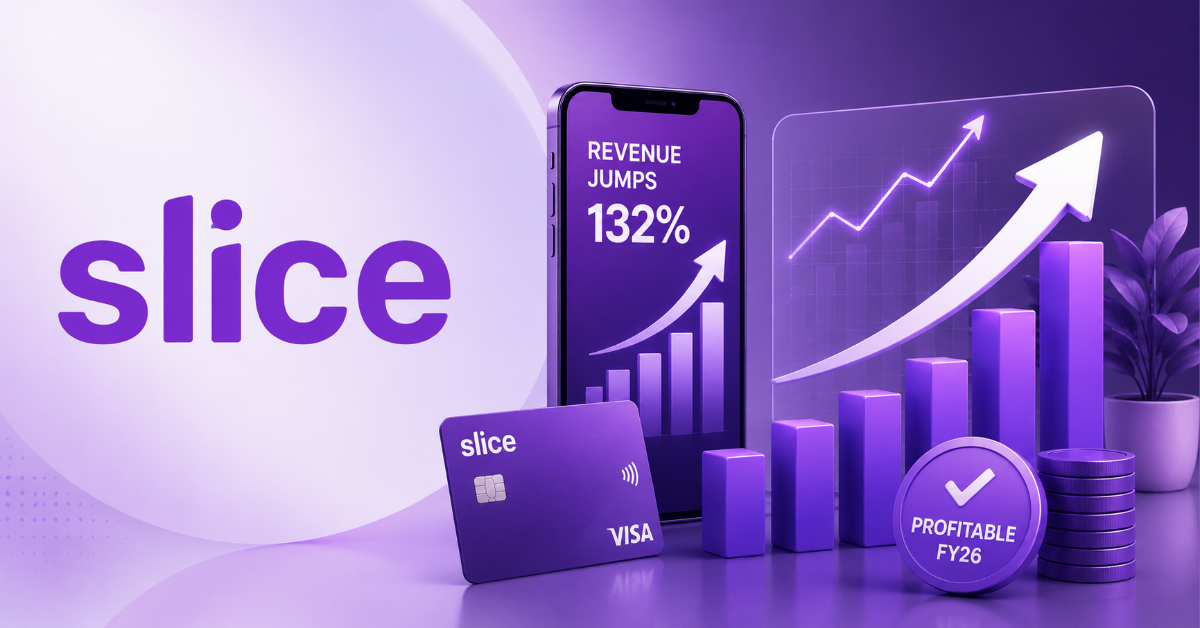
slice has turned profitable in its first full fiscal year operating as a bank, marking a major milestone in its transition from fintech startup to regulated banking institution.
According to the company’s audited annual financial results, slice recorded a 132% year-on-year increase in total revenue during FY26 while also reporting a sharp turnaround in profitability.
The Bengaluru-based digital banking platform reported total revenue of Rs 1,403 crore in FY26 compared to Rs 604 crore in FY25.
For the quarter ended March 2026 (Q4 FY26), the company posted total income of Rs 399.7 crore.
Industry experts believe slice’s profitability milestone is significant at a time when many fintech firms continue struggling to balance rapid growth with regulatory compliance and sustainable unit economics.
How Did The Company Turn Profitable After FY25 Loss?
slice reported a profit of Rs 48.4 crore in FY26 compared to a loss of Rs 217 crore in the previous fiscal year.
Its quarterly performance also improved substantially. During Q4 FY26, the company posted a profit of Rs 20.4 crore against a loss of Rs 89.9 crore during the corresponding quarter last year.
The company also strengthened its balance sheet metrics during the fiscal year.
According to the annual report, slice’s net worth stood at Rs 875.3 crore as of March 31, 2026, while its Capital to Risk-weighted Assets Ratio (CRAR) was reported at 19.1%.
Its debt-equity ratio also improved significantly, narrowing from 0.97 in FY25 to 0.14 in FY26.
“This year marks a key turning point for us as we continue expanding access to credit and building the bank further,” a slice spokesperson said.
Can slice Scale Faster After The Merger?
Founded by Rajan Bajaj, slice operates as a full-stack digital bank offering savings accounts, fixed deposits, UPI services, credit products and UPI-led banking solutions.
The company has raised nearly $400 million in funding to date, including a $220 million Series B round led by Tiger Global Management and Insight Partners.
In recent months, slice has accelerated its banking operations following its merger with North East Small Finance Bank, which is set to be rebranded as Slice Small Finance Bank.
The company recently launched a UPI-powered bank branch in Bengaluru and expanded its UPI credit card services to all users following a phased rollout strategy.
How Is slice Strengthening Leadership During Expansion?
The company has also strengthened its leadership structure as part of its banking transformation journey.
The Reserve Bank of India approved Rajan Bajaj as Managing Director and CEO of the bank, while former State Bank of India executive Sreedevi Pillai joined the board.
Industry analysts believe leadership stability and regulatory alignment will become increasingly critical as slice scales operations as a fully regulated banking entity.
What’s Holding Back Digital Banks Long Term?
While profitability marks an important milestone, analysts note that sustaining margins and maintaining asset quality will remain key challenges for slice going forward.
Unlike fintech-led lending platforms, regulated banking operations require stronger underwriting discipline, low-cost deposit mobilisation and long-term regulatory compliance.
Competition is also intensifying across India’s digital banking ecosystem as traditional banks, neobanks and UPI-focused financial platforms aggressively expand offerings.
Industry experts believe slice’s long-term success will depend on its ability to balance rapid growth with operational discipline, customer trust and sustainable banking fundamentals.