What Stake Has SoftBank Sold?
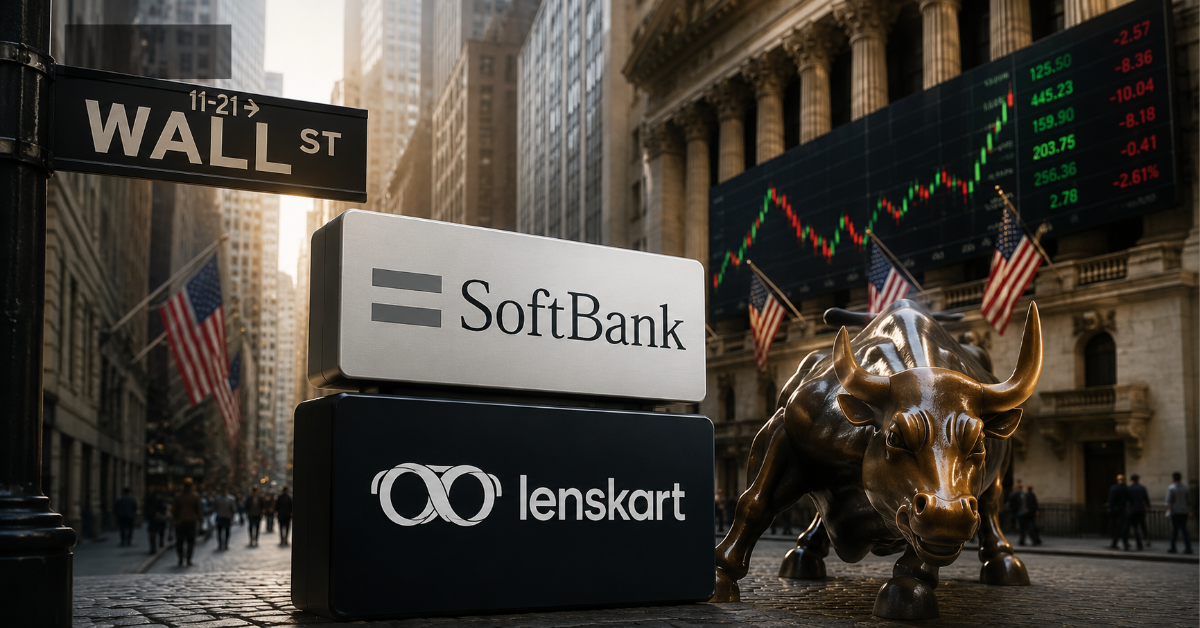
Japanese investment giant SoftBank has sold shares worth ₹2,873 crore in eyewear retailer Lenskart through a large block deal, continuing its gradual monetisation of its investment in the company.
According to stock exchange data, SoftBank affiliate SVF II Lightbulb (Cayman) sold 5.65 crore shares, equivalent to around 3.25% of Lenskart’s equity. The transaction was executed at ₹508.55 per share and was valued at approximately ₹2,873 crore, or nearly $300 million.
The deal marks one of the largest secondary transactions involving the company since its public listing.
Who Purchased The Shares?
The block deal attracted participation from several prominent domestic and global institutional investors.
Investors including Goldman Sachs, Fidelity, WhiteOak Capital, and Quant Mutual Fund acquired shares in the transaction, indicating continued investor interest in the eyewear retailer despite the stake sale.
The broad participation also highlights confidence in Lenskart’s long-term growth prospects and business fundamentals.
Why Did Institutional Investors Participate?
Lenskart has emerged as one of India’s leading consumer technology companies, combining a strong retail presence with an integrated manufacturing and distribution model.
Its consistent revenue growth and improving profitability have made it an attractive investment opportunity for institutional investors seeking exposure to India’s growing consumer sector.
Why Is SoftBank Reducing Its Stake?
SoftBank was among Lenskart’s earliest and largest investors before the company went public.
The investment firm had already sold a portion of its holdings through the offer-for-sale (OFS) component of Lenskart’s IPO. The latest transaction comes after the expiration of the lock-in period applicable to pre-IPO shareholders.
The sale appears to be part of SoftBank’s broader strategy of gradually monetising mature investments and returning capital to investors.
Is SoftBank Exiting Lenskart Completely?
No. The latest transaction represents only a partial stake sale.
Even after offloading 3.25% of the company, SoftBank continues to hold a significant stake in Lenskart. Market observers view the transaction as a profit-booking exercise rather than a complete exit.
The investor remains positioned to benefit from any future value creation by the company.
What Does Lenskart Do?
Founded by Peyush Bansal, Amit Chaudhary, and Sumeet Kapahi, Lenskart is one of India’s largest eyewear retailers.
The company offers prescription glasses, sunglasses, contact lenses, and related vision-care products through both online and offline channels.
Over the years, Lenskart has expanded its presence across India and international markets while investing heavily in manufacturing capabilities through its in-house production facilities.
How Extensive Is Its Retail Network?
Lenskart operates thousands of stores across multiple geographies and has built an omnichannel model that combines digital commerce with physical retail experiences.
Its vertically integrated operations help the company maintain quality control, optimise costs, and improve customer experience.
How Is Lenskart Performing Financially?
The company delivered strong financial performance during the fourth quarter of FY26.
Revenue increased 46% year-on-year to ₹2,516 crore, reflecting robust demand across its product categories and markets.
Lenskart also reported a profit of ₹204 crore during the quarter, highlighting improved operating leverage and business efficiency.
Why Are Investors Focused On Profitability?
As consumer technology companies mature, investors increasingly look beyond revenue growth and focus on sustainable profitability.
Lenskart’s ability to grow rapidly while generating profits has strengthened investor confidence and supported its market valuation.
What Is Lenskart’s Current Market Value?
As of 10:40 AM on the day of the transaction, Lenskart shares were trading at approximately ₹516.
At this price, the company commanded a market capitalisation of around ₹89,753 crore, placing it among India’s most valuable consumer-facing businesses.
The valuation reflects investor optimism around the company’s growth trajectory and market leadership in the eyewear segment.
What Does This Mean For Lenskart?
The successful completion of the block deal demonstrates continued demand for Lenskart shares among institutional investors.
While SoftBank has reduced its exposure, the transaction broadens the company’s institutional shareholder base and improves liquidity in the stock.
Could SoftBank Sell More Shares Later?
Further stake sales cannot be ruled out, particularly as SoftBank has historically monetised investments gradually over time.
However, the investor’s continued ownership suggests it still sees long-term value in Lenskart and remains invested in the company’s future growth story.