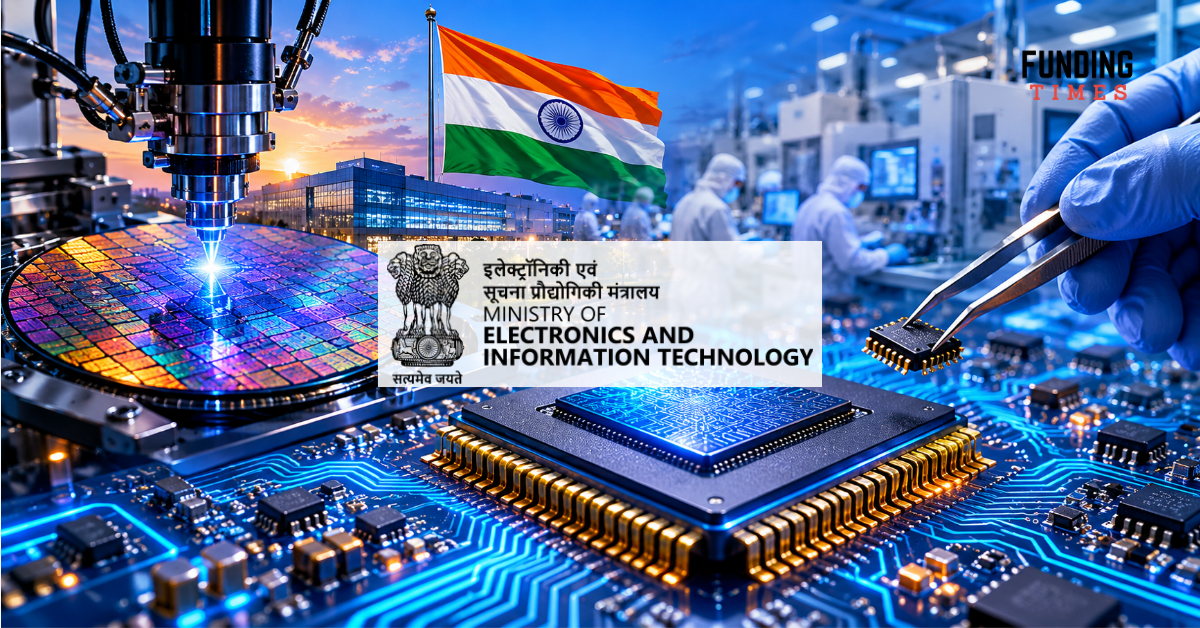
India’s Semiconductor Mission Gains Momentum With Fresh Investments Expected In FY27
India’s ambitious semiconductor manufacturing programme is steadily gaining traction, with companies approved under the Indian Semiconductor Mission (ISM) expected to invest a cumulative ₹31,299 crore by FY27, according to estimates from the Ministry of Electronics and Information Technology (MeitY).
The projected investment represents nearly one-fifth of the total committed investment of approximately ₹1.65 lakh crore under the government’s semiconductor incentive scheme, underscoring the gradual but significant progress being made toward establishing a domestic semiconductor ecosystem.
The development comes as India continues to position itself as a global alternative manufacturing hub amid growing geopolitical tensions, supply chain diversification efforts, and increasing demand for semiconductors across industries ranging from consumer electronics and automobiles to artificial intelligence and defence.
Investments Cross ₹15,000 Crore In FY26
According to MeitY estimates, five semiconductor companies participating in the government’s incentive programme had already invested ₹15,799 crore by the end of FY26.
The ministry expects an additional ₹15,500 crore to be invested during FY27, taking the cumulative investment under the programme to ₹31,299 crore.
These investments are being directed toward semiconductor fabrication facilities, chip packaging and testing units, assembly plants, and other critical infrastructure required to build a robust semiconductor manufacturing ecosystem in the country.
The pace of investment is expected to accelerate further as approved projects move from planning and construction phases into commercial operations over the next few years.
What Is The Indian Semiconductor Mission?
The Indian Semiconductor Mission was launched by the Government of India as part of a broader strategy to strengthen the country’s electronics manufacturing capabilities and reduce dependence on imported chips.
The programme provides financial incentives, policy support, and infrastructure assistance to companies investing in semiconductor fabrication, display manufacturing, semiconductor packaging, and related technologies.
India’s semiconductor incentive package is among the largest industrial policy initiatives launched in recent years and aims to attract both domestic and international technology firms to establish manufacturing operations in the country.
Several major projects have already received approval under the scheme, including semiconductor fabrication units, assembly and testing facilities, and outsourced semiconductor assembly and test (OSAT) operations.
Why Semiconductors Have Become Strategically Important
Semiconductors are often referred to as the “new oil” because they power virtually every modern technology product.
From smartphones, laptops, and consumer electronics to electric vehicles, industrial automation systems, medical devices, telecommunications infrastructure, and advanced defence equipment, semiconductors form the foundation of the digital economy.
Global semiconductor shortages experienced during the pandemic exposed vulnerabilities in supply chains and highlighted the strategic importance of domestic chip manufacturing capabilities.
As a result, countries around the world, including the United States, China, Japan, South Korea, and members of the European Union, have announced large-scale initiatives to strengthen semiconductor production.
India is now seeking to secure a place in this global value chain by developing local manufacturing capacity and reducing its dependence on imports.
Economic And Strategic Benefits For India
Industry experts believe the development of a domestic semiconductor ecosystem could generate substantial economic benefits for India over the long term.
Apart from reducing import dependence, semiconductor manufacturing has the potential to create thousands of highly skilled jobs across engineering, manufacturing, research, and design functions.
The sector can also stimulate growth in related industries such as electronics manufacturing, chemicals, materials, equipment production, logistics, and industrial infrastructure.
Moreover, strengthening semiconductor capabilities is increasingly being viewed as a matter of national security, given the growing importance of chips in defence systems, telecommunications networks, artificial intelligence applications, and critical infrastructure.
Long-Term Vision For A Global Semiconductor Hub
While semiconductor manufacturing requires significant capital investment and long gestation periods, the government remains optimistic about India’s long-term prospects.
The expected ₹31,299 crore investment by FY27 marks an important milestone in building the country’s semiconductor ecosystem, but policymakers view it as only the beginning of a much larger transformation.
As projects become operational and additional investments flow into the sector, India aims to emerge as a competitive global destination for semiconductor manufacturing, packaging, testing, and design.
With global companies increasingly looking to diversify supply chains beyond traditional manufacturing hubs, India’s semiconductor mission could play a pivotal role in shaping the country’s next phase of industrial growth and technological self-reliance.