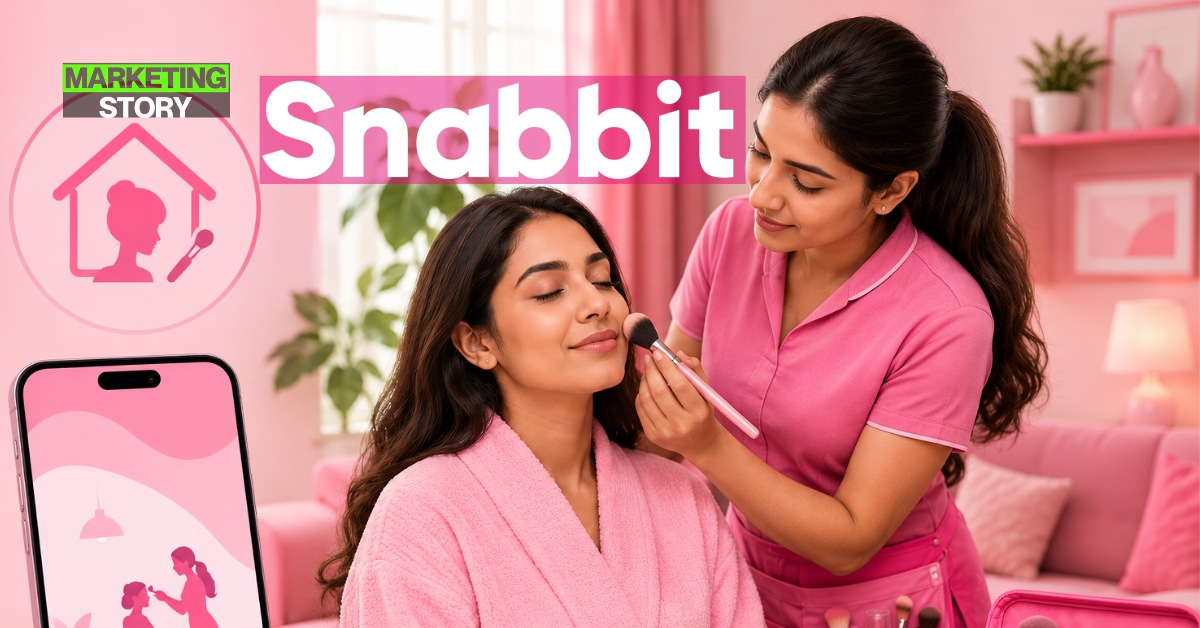
Snabbit has expanded into the beauty services segment with a new instant salon-at-home offering, marking the company’s entry into one of India’s fastest growing consumer convenience categories.
The company said the new service will bring trained beauty professionals directly to customers’ homes within minutes through its hyperlocal fulfilment network.
The move reflects a broader shift in consumer behaviour where users increasingly expect instant access to services across categories beyond food delivery and groceries.
Snabbit Bets On High-Frequency Beauty Market
Aayush Agarwal said beauty services represent a large and high frequency market that aligns naturally with the company’s existing operational model.
According to Agarwal, the current salon-at-home ecosystem still largely depends on appointment-led scheduling, creating friction for users seeking convenience and faster access.
“Consumers today expect convenience everywhere, but availing beauty services still involves long waiting periods,” Agarwal said.
He added that Snabbit sees an opportunity to fundamentally redesign the beauty services experience through speed, reliability and hyperlocal delivery infrastructure.
Industry analysts believe beauty and personal care services could become one of the next major battlegrounds for India’s instant-service startups.
Quick Commerce Model Expanding Beyond Deliveries
India’s startup ecosystem has already seen rapid growth in quick commerce across groceries, food delivery, pharmacy and household essentials.
Companies are increasingly exploring whether the same instant fulfilment infrastructure can be extended to services such as beauty care, wellness, repairs and professional assistance.
Analysts say beauty services are especially attractive because they involve repeat usage, strong customer retention potential and relatively high transaction frequency.
The salon-at-home market in India has expanded significantly over the last few years due to rising urbanisation, growing disposable incomes and increased preference for convenience based services.
Hyperlocal Fulfilment Becoming Key Differentiator
Snabbit’s model focuses on hyperlocal fulfilment, where service professionals are positioned closer to customer demand clusters to reduce wait times.
Industry experts believe operational speed and service reliability will become critical differentiators as competition intensifies in the home-services market.
Unlike traditional salon platforms that often require advance scheduling, instant service models attempt to replicate the convenience users now expect from food delivery and quick commerce platforms.
This shift could fundamentally alter consumer expectations around personal care services.
Competition Rising In Home Services Segment
The home services and beauty-tech segment in India has already attracted multiple startups and technology platforms over the past few years.
However, most existing players continue to operate through scheduled appointment models.
Snabbit’s entry signals a growing trend where startups are experimenting with ultra-fast service fulfilment rather than traditional booking systems.
Industry observers say the challenge will be balancing operational efficiency, service quality and professional availability while maintaining fast delivery timelines.
Beauty Services Seen As Large Consumer Opportunity
India’s beauty and personal care market continues to grow rapidly, driven by rising digital adoption, social media influence and increasing consumer spending on self-care services.
Urban consumers, particularly younger demographics, are increasingly prioritising convenience-led experiences across categories.
This has created opportunities for startups attempting to build technology driven platforms around personal services.
Industry experts believe companies capable of combining reliable service quality with rapid fulfilment could create strong consumer loyalty in the category.
Snabbit Expanding Beyond Core Services
The beauty-services launch marks an important strategic expansion for Snabbit beyond its existing home-services offerings.
Analysts believe the company may be attempting to position itself as a broader instant-services platform rather than remaining limited to a single category.
As India’s quick-commerce ecosystem evolves, startups are increasingly searching for new high-frequency use cases capable of driving repeat customer engagement and higher lifetime value.
Beauty services, with recurring demand and strong urban consumer adoption, could emerge as one of the most competitive segments in the next phase of India’s instant services economy.