Regulator Challenges Tribunal’s Decision Exempting Sahara Managers And Company Secretary From Liability
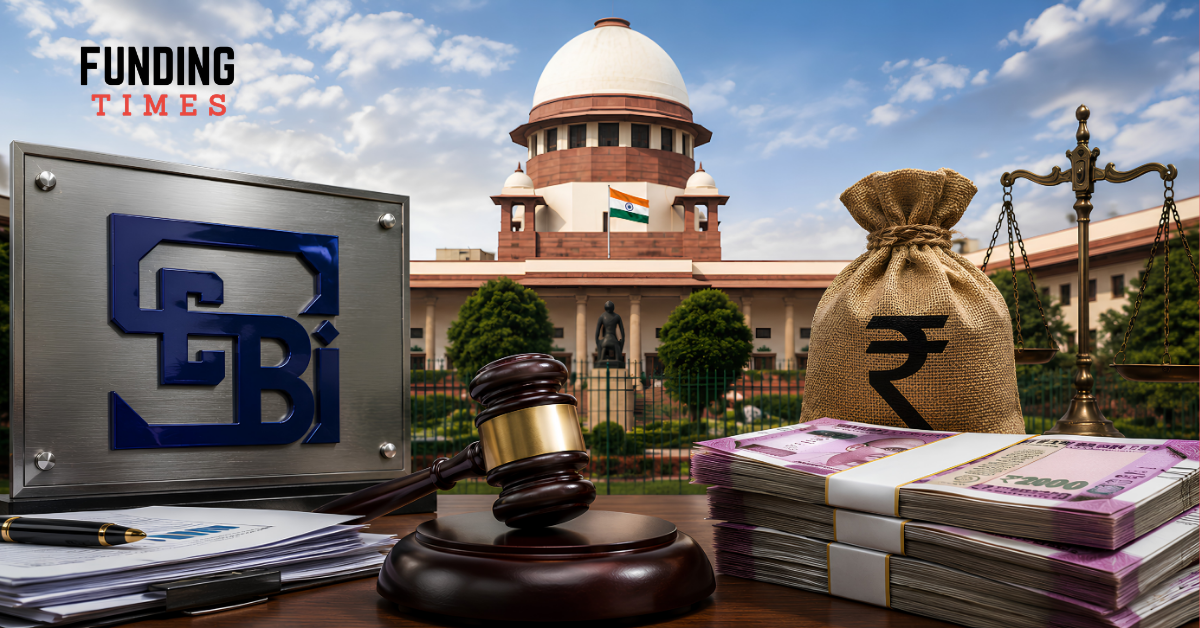
The Securities and Exchange Board of India (Sebi) has approached the Supreme Court against a portion of a Securities Appellate Tribunal (SAT) order that granted relief to four managers and the company secretary of Sahara India Commercial Corporation Ltd (SICCL) in the long-running ₹14,106 crore optionally fully convertible debentures (OFCD) case.
The matter is scheduled to be heard on June 18 by a vacation Bench comprising Chief Justice Surya Kant and Justice V Mohana. While Sebi has not challenged the tribunal’s broader findings against Sahara and its directors, it has questioned SAT’s decision to absolve certain employees of responsibility in one of India’s most significant securities market cases.
The appeal marks the latest chapter in the decade-long legal battle surrounding Sahara’s fundraising practices, which involved nearly 1.98 crore investors and thousands of crores of rupees raised through OFCDs.
Background Of The Sahara OFCD Dispute
The case relates to the issuance of optionally fully convertible debentures by Sahara India Commercial Corporation Ltd between 1998 and 2008.
According to Sebi, SICCL mobilised approximately ₹14,106 crore from around 19.8 million investors during this period. The regulator maintained that the scale of fundraising and the number of investors involved clearly indicated that the debentures were issued through a public offer rather than a private placement.
This distinction became crucial because public issues fall under Sebi’s regulatory oversight and must comply with securities market regulations, disclosure norms, and investor protection requirements.
Sahara, however, consistently argued that the debenture issuances were private placements and therefore outside Sebi’s jurisdiction. The company also maintained that a substantial portion of the money collected had already been repaid to investors.
The dispute eventually led to extensive regulatory scrutiny and multiple legal proceedings over the years.
SAT Upheld Sebi’s Action Against Sahara
In a significant ruling delivered on March 9, a three-member Bench of the Securities Appellate Tribunal upheld Sebi’s action against SICCL and dismissed appeals filed by the company and its directors.
The tribunal agreed with Sebi’s position that the OFCD issuances constituted a public offer under securities laws.
SAT observed that raising funds from nearly 19.8 million investors could not reasonably be treated as a private placement. The tribunal also rejected Sahara’s arguments regarding repayment of funds, effectively endorsing Sebi’s regulatory findings.
The ruling strengthened Sebi’s case that the company had violated securities regulations while raising funds from a massive investor base.
Why Sebi Is Challenging The SAT Order
While SAT upheld action against Sahara and its directors, it granted relief to four managers and the company’s secretary who had filed separate appeals.
The tribunal held that these individuals were employees acting on behalf of the company and could not automatically be held liable for the organization’s actions.
SAT further noted that the company secretary had signed the prospectus under powers of attorney granted by the directors. As a result, the tribunal concluded that the directors, as principals, remained responsible for actions carried out by their authorised representatives.
Sebi has now challenged this specific finding before the Supreme Court.
The regulator believes the issue requires judicial examination because it raises important questions about accountability and liability of company officials in large-scale securities law violations.
Implications For Corporate Governance
Legal experts believe the Supreme Court’s decision could have implications beyond the Sahara case.
The ruling may help clarify the extent to which senior employees, managers, and company secretaries can be held accountable when regulatory violations occur within a company.
Corporate governance professionals are closely watching the matter because the judgment could influence how responsibility is assigned in future securities market investigations.
A decision in Sebi’s favour could strengthen regulatory accountability standards, while upholding SAT’s relief could reinforce protections for employees acting within the scope of their assigned duties.
What Happens Next?
The Supreme Court’s hearing on June 18 will focus on whether the relief granted by SAT to the four managers and company secretary should remain in force.
Importantly, the broader findings against Sahara India Commercial Corporation Ltd and its directors are not under challenge in the current appeal.
Given the scale of the OFCD mobilisation, the number of investors involved, and the significance of the legal questions raised, the case continues to be one of the most closely followed securities law disputes in India.
The Supreme Court’s ruling is expected to provide greater clarity on corporate accountability and regulatory liability in complex financial misconduct cases.