Can Korean Food Become India’s Next Big FMCG Trend?
The influence of Korean culture in India is no longer limited to K-pop, K-dramas and beauty products. A growing number of consumers are now embracing Korean cuisine, creating a significant opportunity for food startups looking to ride the wave.
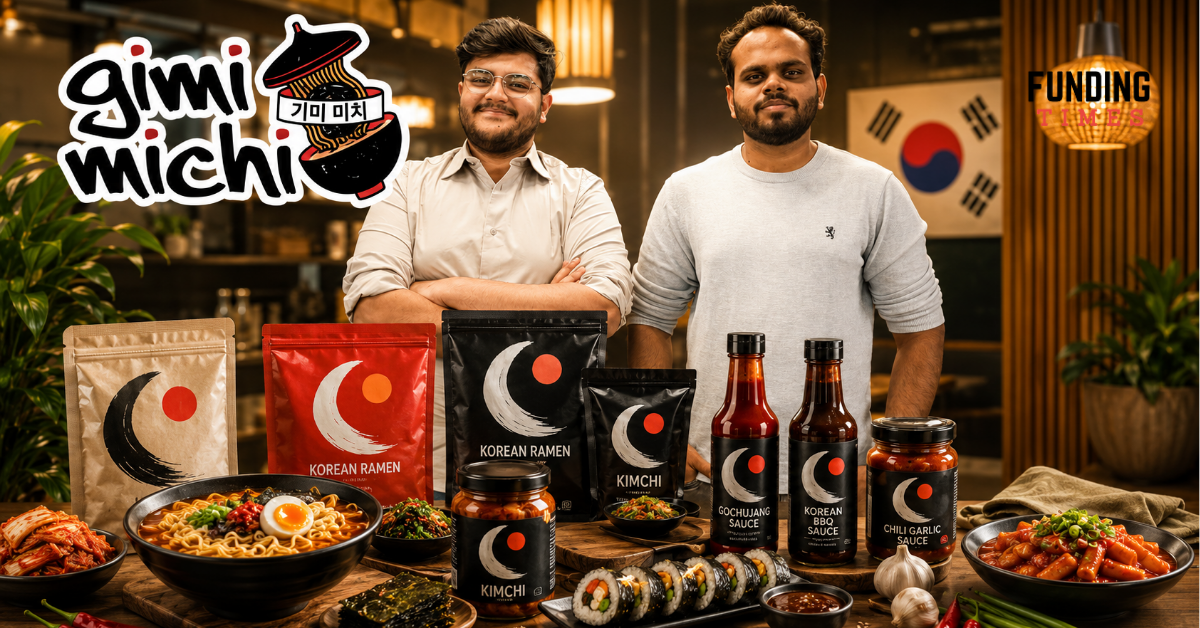
Capitalising on this trend, Gurugram-based Korean food startup Gimi Michi has raised $1 million in a seed funding round led by IndiaQuotient. The round also saw participation from DeVC, Titan Capital and IIMA Ventures.
The fresh capital will be used to accelerate product development, strengthen distribution, expand the team and build a stronger consumer brand as the company looks to establish itself as India’s leading Korean FMCG player.
How Did Gimi Michi Spot The Korean Food Opportunity?
Founded by Nishank Goyal, Akhil Kumar and Bodhi Rathor, Gimi Michi was launched with a simple belief: Korean food could replicate the success that Korean entertainment has already achieved in India.
The founding team brings experience from leading organizations including BCG, Mondelez and AB InBev, giving them strong expertise across consumer products, brand building and market expansion.
While Indian consumers have increasingly become familiar with Korean culture through Netflix, social media and music, the founders saw a gap in the availability of authentic Korean food products at affordable price points.
Rather than treating Korean cuisine as a niche category, the startup is betting on it becoming a mainstream food segment over the next decade.
Why Is Gimi Michi Growing So Quickly?
Launched just six months ago, Gimi Michi currently operates in the Korean ramen segment and has already achieved impressive early traction.
According to the company, it has become the top-selling noodles brand on Flipkart and has crossed ₹1 crore in monthly net sales.
Even more notable is its reported growth rate of approximately 60% month-on-month, achieved with a single product offering.
Such early momentum suggests that consumer demand for Korean food products extends well beyond metro cities and niche audiences.
The startup also claims repeat purchase rates significantly above category averages across both e-commerce and quick-commerce platforms, indicating strong product-market fit.
Are Smaller Cities Driving The Korean Food Boom?
One of the most surprising aspects of Gimi Michi’s growth story is where its customers are coming from.
According to the company, nearly 50% of its sales originate from Tier II and Tier III cities.
This challenges the assumption that Korean food is primarily an urban trend limited to metro consumers.
As digital content continues to reach smaller towns and cities, consumer preferences are increasingly becoming national rather than regional.
The popularity of Korean entertainment appears to be translating into curiosity and demand for Korean food products across the country.
Why Are Young Consumers Driving Demand?
The company believes younger consumers will play a critical role in expanding the category.
Co-founder Akhil Kumar argues that Korean cuisine has the potential to become a mainstream food preference among Gen Alpha consumers, similar to how Chinese and Italian food became deeply integrated into Indian eating habits over previous decades.
With social media continuing to influence food discovery and consumption trends, Korean flavors are increasingly finding a place in everyday dining habits.
How Big Is The Market Opportunity?
The broader market potential is attracting attention from both startups and established FMCG giants.
Industry estimates suggest India’s ramen market could surpass $1 billion over the next decade.
Korean noodles already account for a substantial share of noodle sales across quick-commerce platforms, highlighting growing consumer acceptance.
Recognising this trend, major FMCG companies including Nestlé, ITC and Hindustan Unilever have introduced Korean-inspired food products in recent months.
However, Gimi Michi believes there remains significant whitespace for a dedicated Korean food brand built specifically around authenticity and category expertise.
What Comes Next For Gimi Michi?
While ramen remains its flagship offering, the company has much broader ambitions.
The startup plans to expand into adjacent categories including Korean sauces, snacks and ready-to-eat products as it builds a full-stack Korean food ecosystem for Indian consumers.
The newly raised capital is expected to accelerate this expansion while strengthening the company’s presence across e-commerce, quick commerce and modern retail channels.
As Korean culture continues gaining popularity across India, Gimi Michi is positioning itself to become one of the first scaled brands dedicated entirely to Korean food.
If current growth trends continue, the startup could emerge as one of the biggest beneficiaries of India’s next major consumer food trend.