Why Are Investors Backing India’s Recycling And Circular Economy Sector?
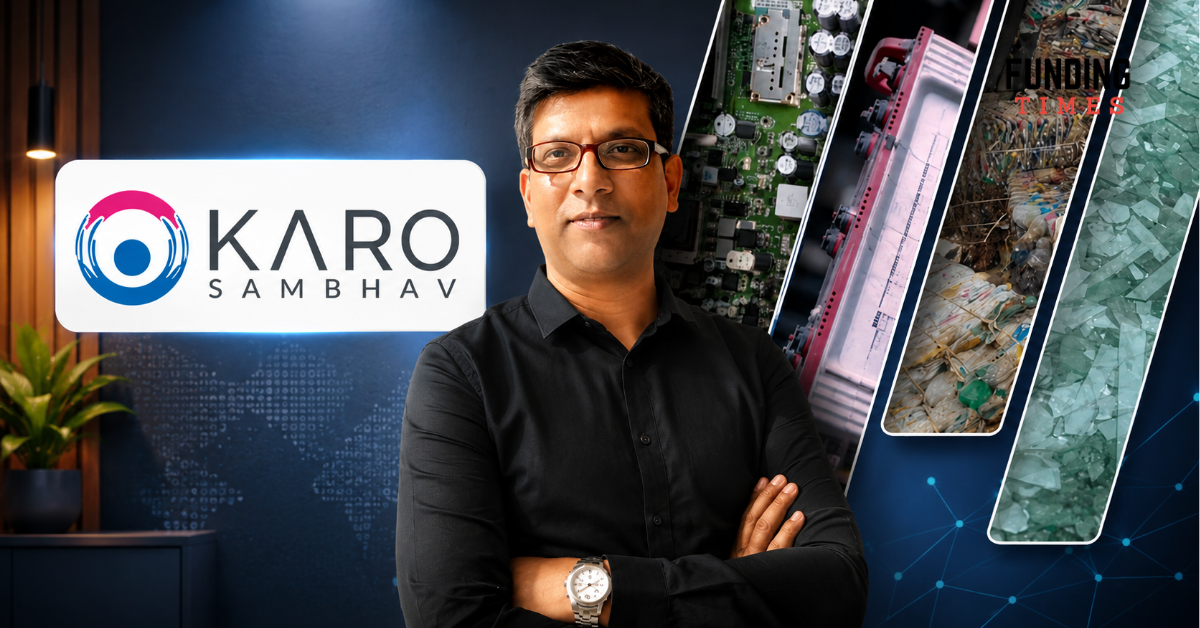
Circular economy and recycling company Karo Sambhav has raised ₹56 crore ($6 million) in a pre-Series A funding round led by Rainmatter, the investment initiative backed by Zerodha founders Nithin and Nikhil Kamath.
The funding comes at a time when India’s demand for critical minerals and sustainable resource recovery is accelerating amid growing adoption of electric vehicles, renewable energy systems, advanced electronics, and artificial intelligence infrastructure.
According to the company, the fresh capital will be deployed to expand recycling infrastructure focused on recovering critical, precious, and high-value materials from end-of-life products and waste streams.
What Does Karo Sambhav Do?
Founded in 2017 by Pranshu Singhal, Gurugram-based Karo Sambhav operates across multiple waste and recycling categories, including e-waste, batteries, glass, plastics, and other end-of-life material streams.
The company works with manufacturers, corporations, governments, and international organizations to build responsible collection, recycling, and resource recovery systems.
Over the years, Karo Sambhav has emerged as one of India’s leading circular economy players, helping formalize a largely fragmented recycling ecosystem while creating sustainable waste management solutions.
The startup has collaborated with global institutions such as the German Agency for International Cooperation (GIZ), the International Finance Corporation (IFC), and the International Labour Organization (ILO) to strengthen recycling infrastructure and improve material recovery rates across India.
Why Is Critical Mineral Recycling Becoming Important?
As countries race to secure supply chains for advanced technologies, critical minerals have become strategically important.
Materials such as indium, tin, cobalt, lithium, nickel, and rare earth elements are essential components in semiconductors, electric vehicles, batteries, renewable energy systems, artificial intelligence hardware, and quantum computing technologies.
According to Karo Sambhav, India’s ability to recover these materials remains limited despite the country generating large volumes of electronic waste every year.
The company believes strengthening domestic recycling capabilities can reduce import dependence, improve resource security, and support India’s ambitions in advanced manufacturing and technology sectors.
Can Recycling Help India Reduce Dependence On Imports?
India currently relies heavily on imports for several critical minerals required by strategic industries.
With geopolitical tensions, supply-chain disruptions, and increasing global competition for mineral resources, recycling is emerging as an important alternative source of raw materials.
Recovering valuable metals from discarded electronics, batteries, and industrial waste can help create a more resilient and sustainable domestic supply chain while reducing environmental impact.
This has made urban mining and resource recovery a growing priority for both policymakers and private-sector investors.
How Large Is Karo Sambhav’s Recycling Network?
Karo Sambhav claims to have built one of the largest collection and recycling networks in the country.
The company currently operates two recycling facilities and has channelized more than 150,000 metric tonnes of waste for responsible recycling and resource recovery.
Its collection network spans over 50 cities across India, enabling the company to aggregate waste materials from consumers, businesses, and institutional partners.
The startup has also worked with more than 50 global and domestic corporations, including Apple, Dell Technologies, Cisco, and Canon, helping them achieve sustainability and recycled-content targets.
Why Is E-Waste Emerging As A Major Opportunity?
India is currently the world’s third-largest generator of electronic waste.
According to industry estimates, the country produces approximately 4.1 million metric tonnes of e-waste annually, a figure expected to rise significantly as digital adoption continues to expand.
Globally, annual e-waste generation is projected to reach 82 million metric tonnes by 2030.
Electronic waste contains high concentrations of valuable metals and materials, making it one of the most economically attractive segments within the recycling industry.
Recognizing this opportunity, Karo Sambhav plans to prioritize e-waste recycling while simultaneously building capabilities for adjacent waste streams such as batteries and industrial materials.
How Does Government Policy Support The Sector?
The company has received Eligibility Status under the Incentive Scheme for Promotion of Critical Mineral Recycling under the National Critical Minerals Mission (NCMM), an initiative launched by the Ministry of Mines.
The scheme aims to encourage investments in recycling infrastructure and strengthen India’s domestic capabilities for recovering critical minerals from waste streams.
Industry observers view such policy support as an important step toward creating a circular economy ecosystem capable of supporting India’s long-term industrial and energy transition goals.
Who Are Karo Sambhav’s Competitors?
The recycling and resource recovery sector has attracted increasing investor interest over the past few years.
Several startups are building specialized capabilities across different waste categories.
Notable players include Rocklink India and Namo in electronic waste recycling, BATX and LEO in battery recycling, as well as E-Parisara and Rubamin in broader recycling and resource recovery operations.
However, Karo Sambhav differentiates itself through its focus on critical mineral recovery, formalized collection networks, and partnerships with global corporations and development institutions.
What Lies Ahead For Karo Sambhav?
With fresh funding from Rainmatter, Karo Sambhav is positioning itself at the center of India’s growing circular economy movement.
As demand for critical minerals continues to rise and sustainability becomes a strategic priority for governments and businesses alike, the company aims to build large-scale recycling infrastructure capable of recovering valuable materials from waste streams.
The latest funding round reflects growing confidence that recycling will play a crucial role in securing India’s future supply chains while supporting environmental and economic sustainability objectives.