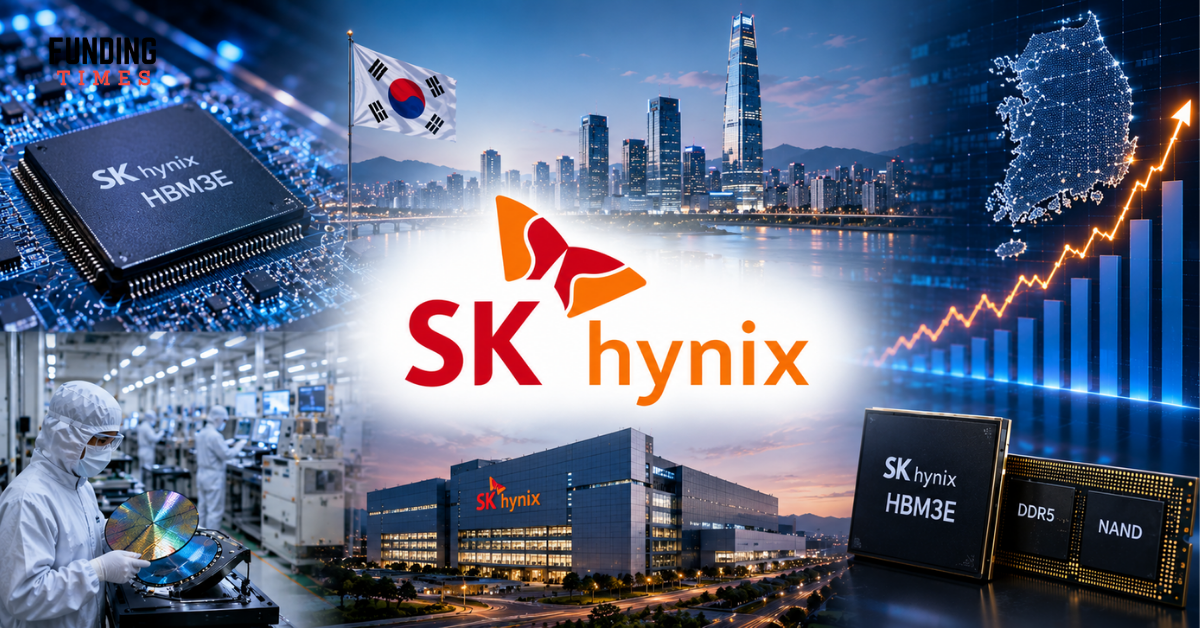
How Did SK Hynix Surpass Samsung Electronics?
In a landmark moment for the global semiconductor industry, SK Hynix has overtaken Samsung Electronics to become South Korea’s most valuable listed company. The achievement reflects the dramatic impact of artificial intelligence (AI) on the memory chip market and highlights one of the most remarkable corporate turnarounds in modern technology history.
SK Hynix shares rose sharply on Monday, lifting the company’s market capitalization to 2,082.5 trillion won (approximately $1.35 trillion). This narrowly surpassed Samsung Electronics, whose market value stood at 2,081.3 trillion won, excluding preferred shares. Samsung had maintained its position as South Korea’s most valuable company for more than two decades, making the development a historic shift in the country’s corporate landscape.
The milestone comes as AI continues to reshape the semiconductor sector, creating unprecedented demand for advanced memory technologies required to power large language models, cloud computing infrastructure, and next-generation AI applications.
Why Is SK Hynix Emerging as the Biggest AI Winner?
The company’s rise has been driven largely by its leadership in High-Bandwidth Memory (HBM), a specialized memory technology that has become essential for AI systems.
Unlike traditional memory chips, HBM uses vertically stacked memory layers to deliver significantly higher speeds while consuming less power. These capabilities make it a critical component in AI accelerators produced by companies such as Nvidia, which dominate the AI hardware ecosystem.
As technology giants including Microsoft, Google, Meta, and Amazon continue investing billions of dollars in AI infrastructure, demand for HBM chips has surged dramatically. This has transformed memory chips from relatively commoditized products into strategic assets at the center of the global AI race.
Industry estimates suggest SK Hynix controlled approximately 61% of the global HBM market in 2025, comfortably ahead of Samsung Electronics at 17% and Micron Technology at 21%. This leadership position has enabled the company to command stronger pricing power and significantly improve profitability.
From Financial Crisis to Industry Leadership
SK Hynix’s current success is particularly noteworthy given its troubled past.
In the early 2000s, the company, then known as Hynix Semiconductor, was burdened by heavy debt following an aggressive expansion strategy. At one point, it was close to being acquired by US-based Micron Technology. The deal eventually collapsed, leaving the company under creditor control for several years.
Its shares fell to penny-stock levels in 2003, and many investors questioned its long-term survival prospects.
The turnaround began after SK Group acquired the company and committed to investing in advanced semiconductor technologies. While many competitors reduced investments during industry downturns, SK Hynix continued developing next-generation memory products, including HBM technology.
That long-term strategy has now paid off spectacularly.
After reporting an operating loss of 7.73 trillion won in 2023 during a severe semiconductor downturn, the company rebounded strongly as AI demand accelerated worldwide. In 2024, SK Hynix reported a record operating profit of 23.5 trillion won, marking one of the fastest recoveries in the semiconductor industry.
What Does This Mean for Samsung Electronics?
The rise of SK Hynix also signals growing competitive pressure on Samsung Electronics.
While Samsung remains the world’s largest DRAM manufacturer and continues to dominate several technology segments including smartphones, displays, and consumer electronics, analysts believe its leadership in advanced AI memory solutions has weakened.
Market researchers estimate that SK Hynix will continue expanding its memory production capacity faster than Samsung over the coming years. If current trends continue, the production gap between the two companies could narrow significantly by 2028.
Industry experts say the success of SK Hynix demonstrates how AI is changing the economics of the semiconductor industry. Companies with leadership in specialized AI-focused technologies are increasingly gaining an advantage over firms relying on traditional scale and manufacturing dominance.
As global investment in artificial intelligence continues to accelerate, SK Hynix appears well positioned to strengthen its role as a key supplier to the world’s largest technology companies. Its rise from near bankruptcy to industry leadership stands as one of the most significant success stories of the AI era.